
THE PROBLEM
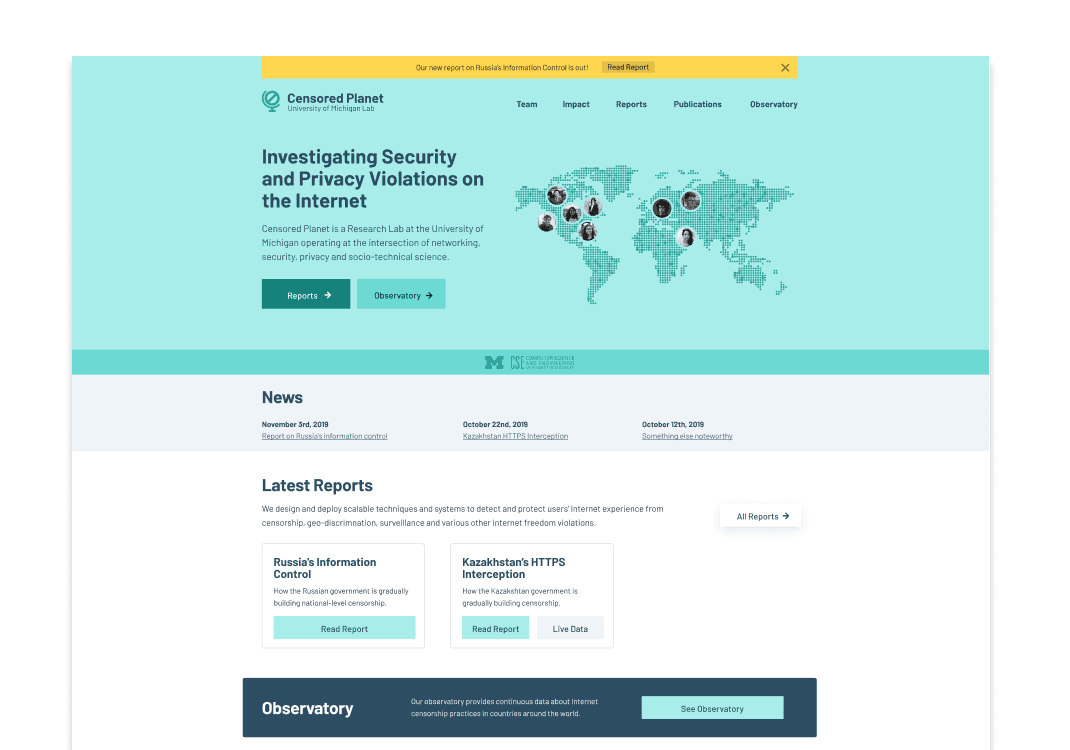
A site built around one project instead of the lab behind it
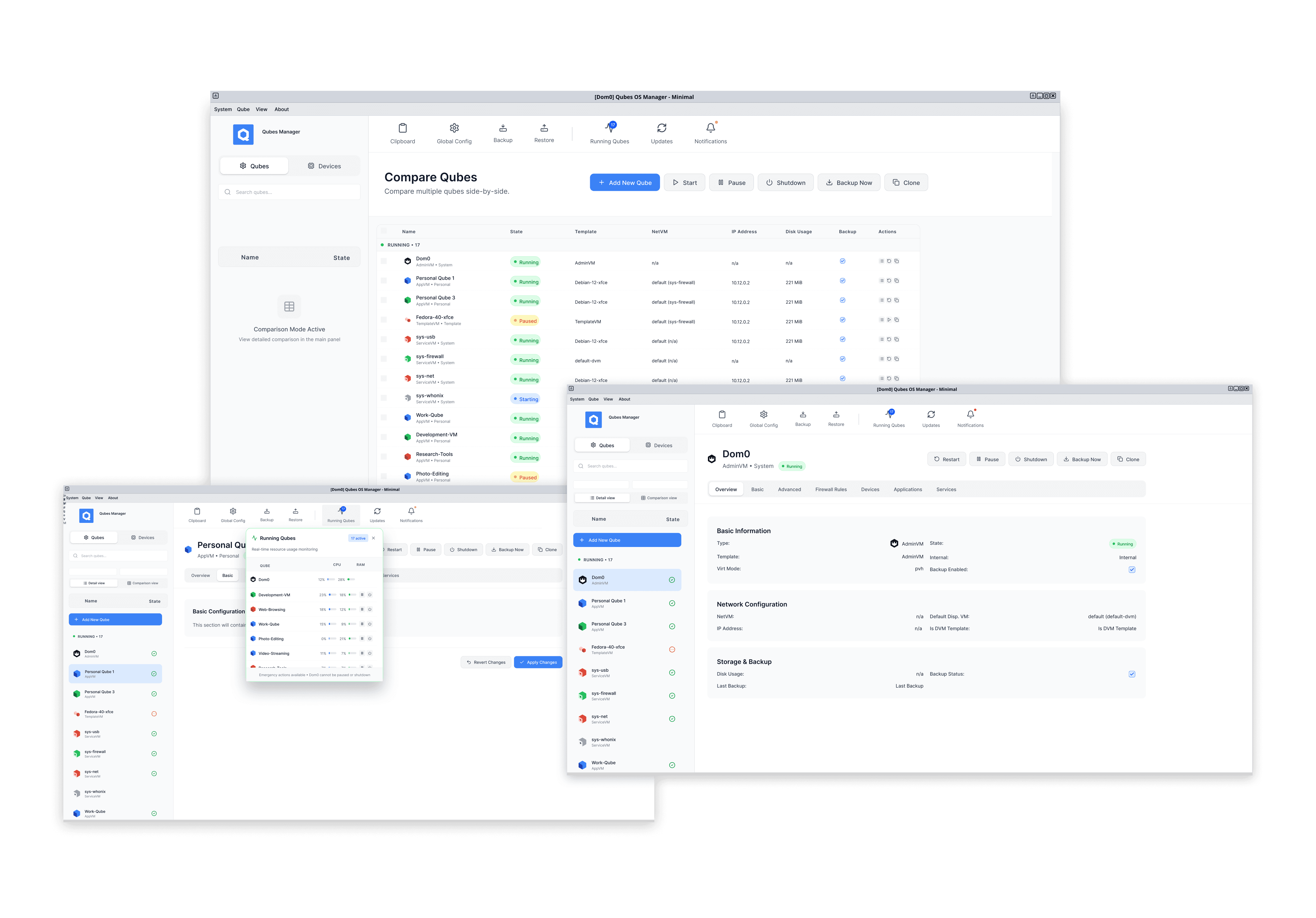
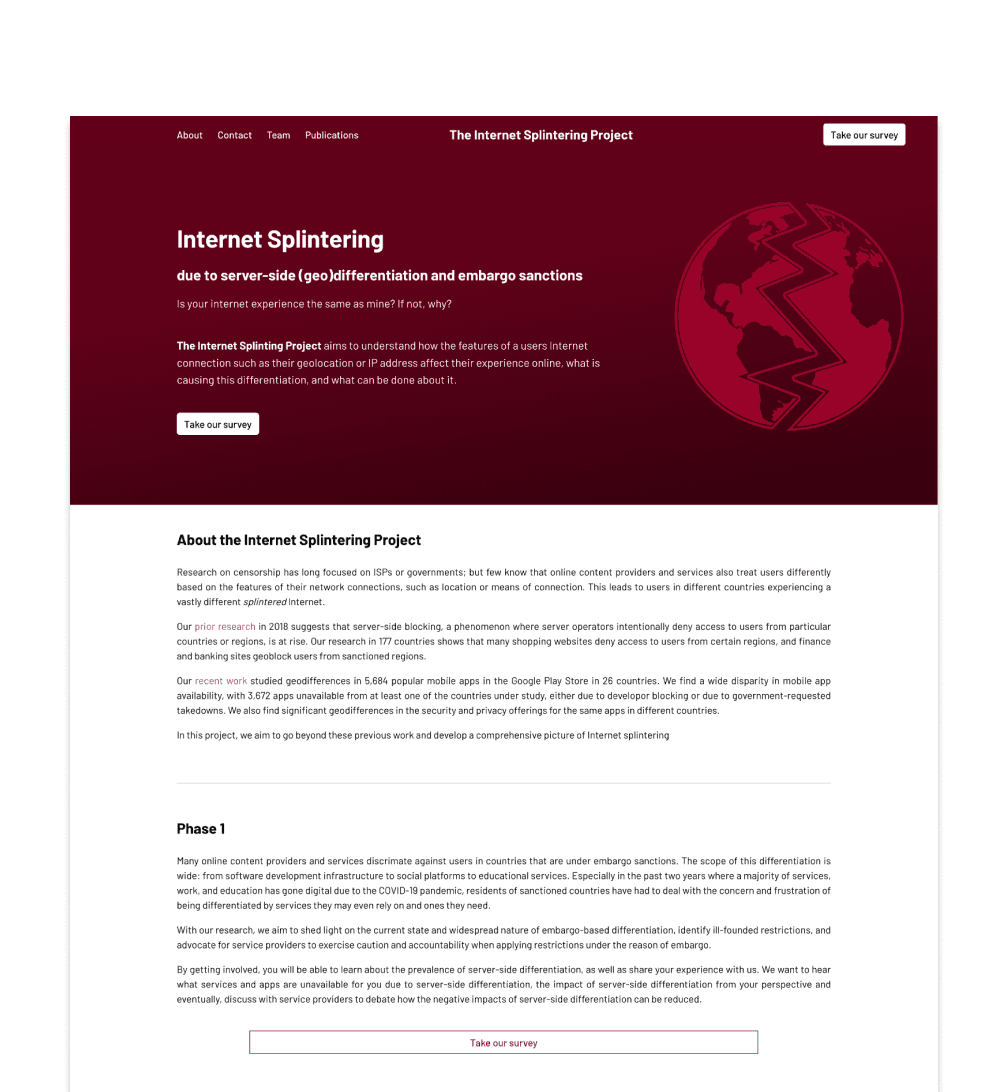
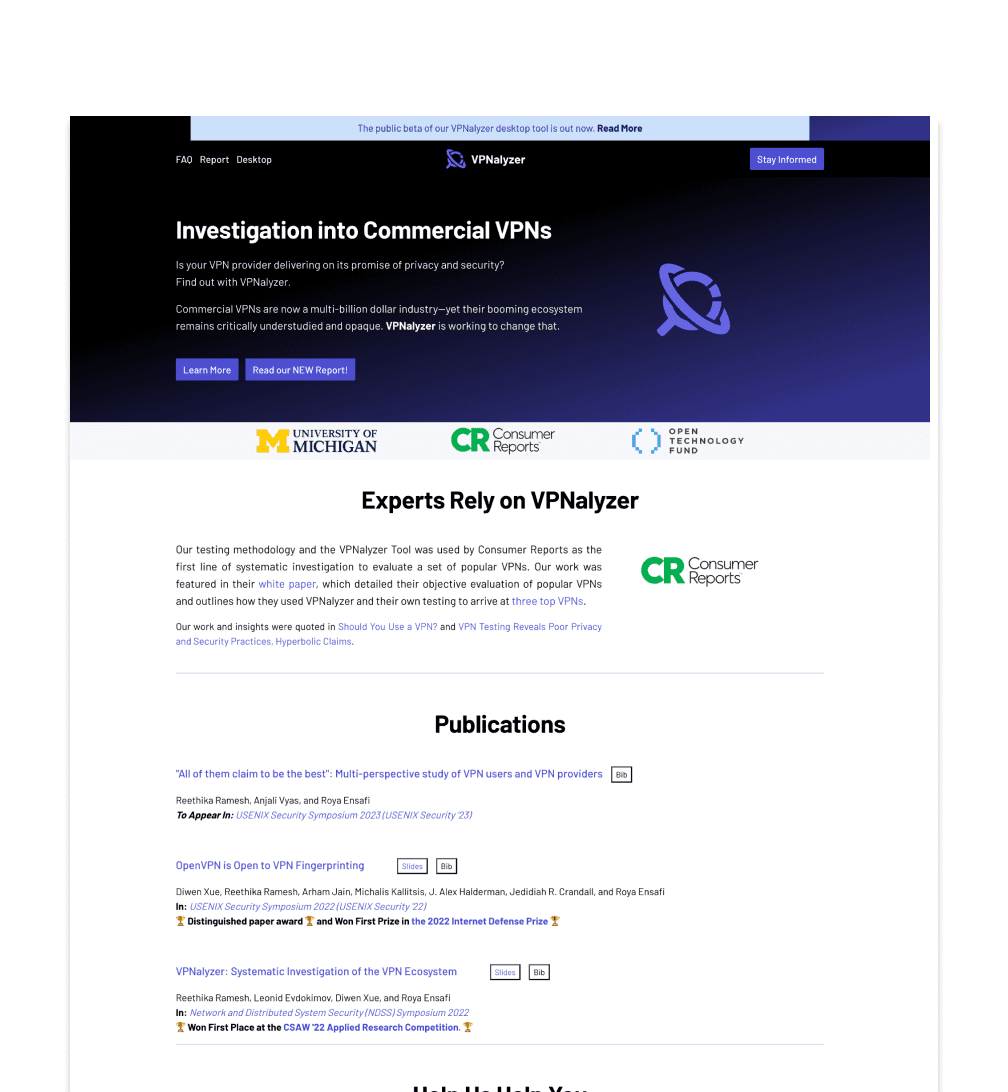
Over time the lab launched additional initiatives, including VPNAnalyzer and the Internet Splintering Project, each with its own site.
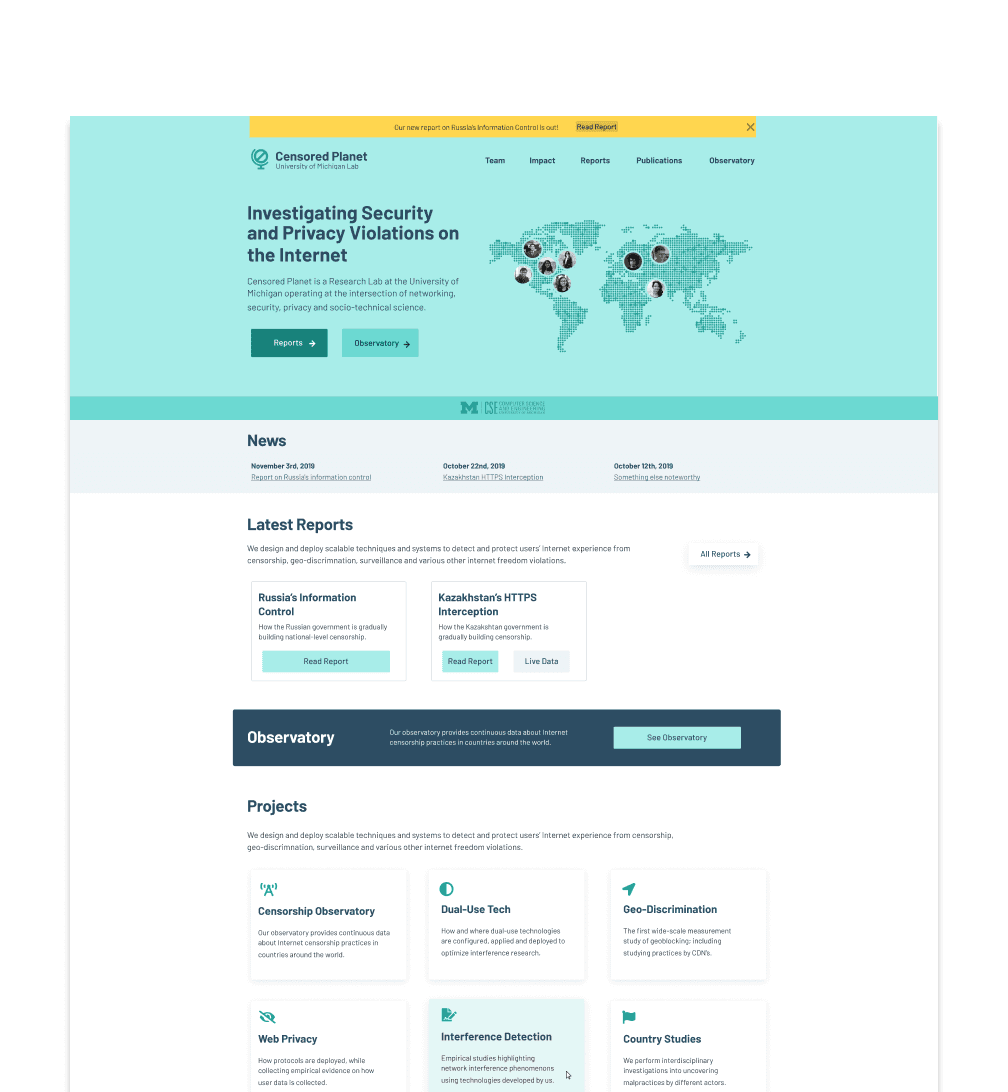
Despite this growth, the structure of the main site continued to center the Observatory. As a result, the lab’s broader research ecosystem was difficult to understand without prior familiarity with its internal projects.
The core challenge was structural: the website needed to represent an organization and its research programs, not a single measurement tool.
ECOSYSTEM ANALYSIS
Understanding the existing ecosystem
To understand the scope of the problem, I conducted a content and structure audit across the entire Censored Planet ecosystem. This included the main site as well as project sites for the Observatory, VPNAnalyzer, and the Internet Splintering Project.
Content was mapped according to its purpose: explaining research, publishing findings, demonstrating tools, or inviting collaboration. This revealed that the existing structure reflected the lab’s internal history rather than how external audiences approach the work.
Visitors arriving to learn about censorship research were forced to navigate technical projects first, making the lab’s mission and broader work harder to understand.
INFORMATION ARCHITCTRE
Reframing the site around the organisation
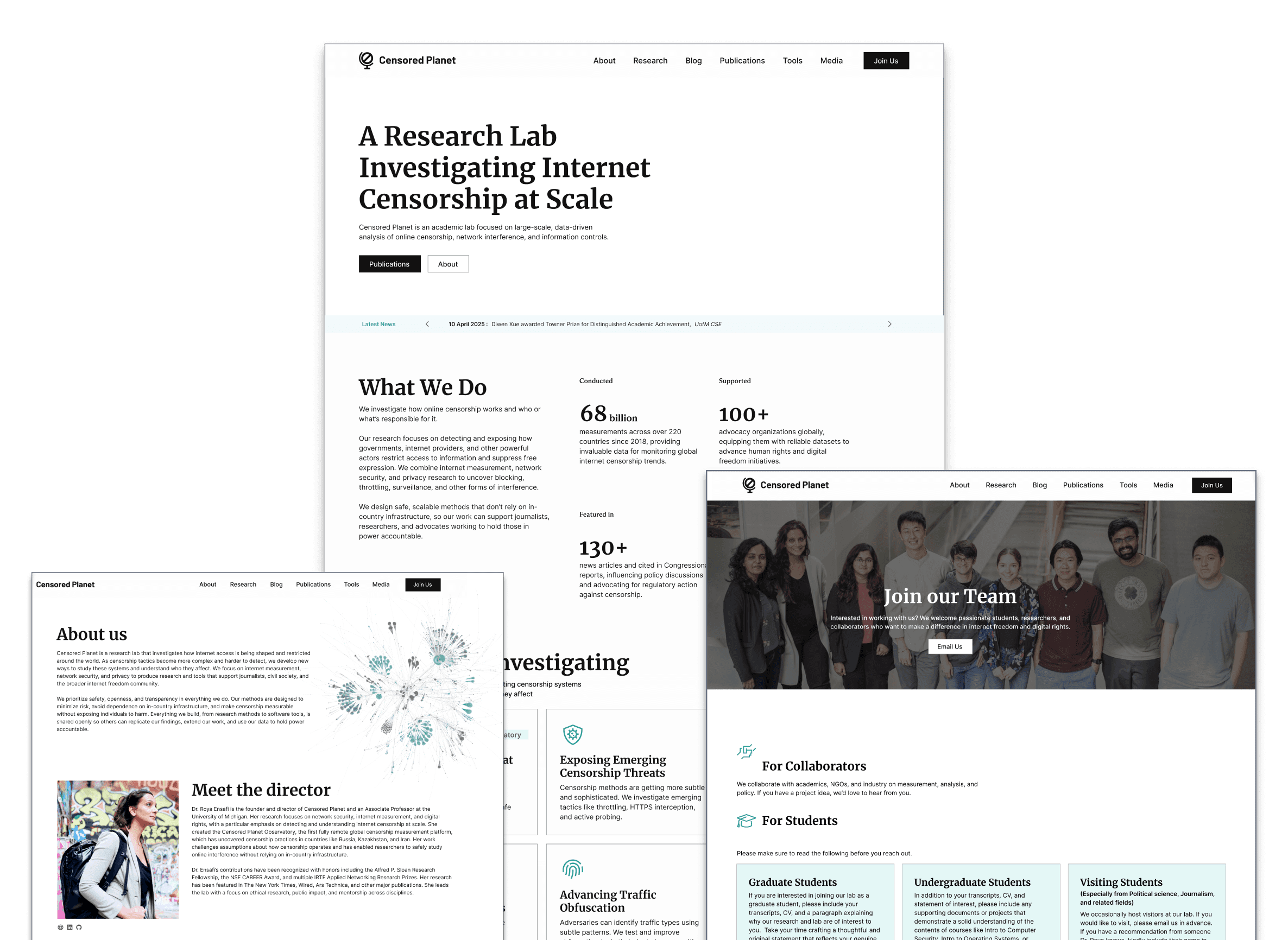
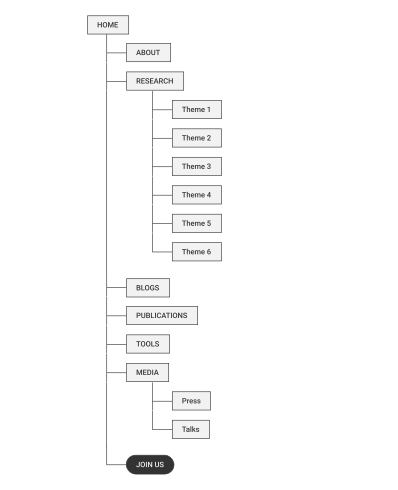
The redesigned structure introduces Censored Planet itself as the primary entry point. Rather than organizing the site around individual tools or project sites, I prioritized a lab-centered structure so visitors could understand the organization first and then navigate into its research, platforms, and initiatives.
This structure allows different audiences to navigate the site according to their needs. Researchers can explore publications and reports, while journalists or funders can quickly understand the lab’s mission and impact.
UI DESIGN
Designing for a research hub
Lab-first homepage
The homepage introduces Censored Planet as a research organisation first, surfacing key areas of work before directing users into specific projects. This shifts the experience from navigating a single platform to understanding a broader ecosystem.
Readability for dense content
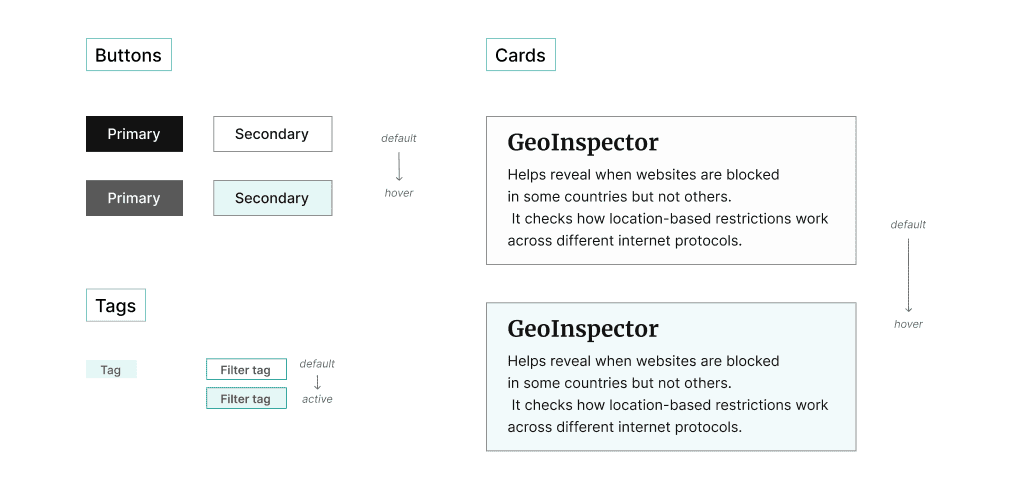
The site contains long-form research, project documentation, and technical material. The interface was designed to support both scanning and deeper reading, with clear hierarchy and layout patterns that help users quickly identify relevant content without being overwhelmed.
OUTCOME
A unified research platform
The redesigned website presents Censored Planet as a cohesive research lab rather than a standalone project.
The new platform:
consolidates content from multiple project sites
clarifies the relationship between projects, research, and tools
improves navigation for researchers, journalists, policymakers, and funders
introduces a scalable interface system for future growth
Other Projects